Loading...
Serving Desert Hot Springs, CA and surrounding areas. (760) 993-6310
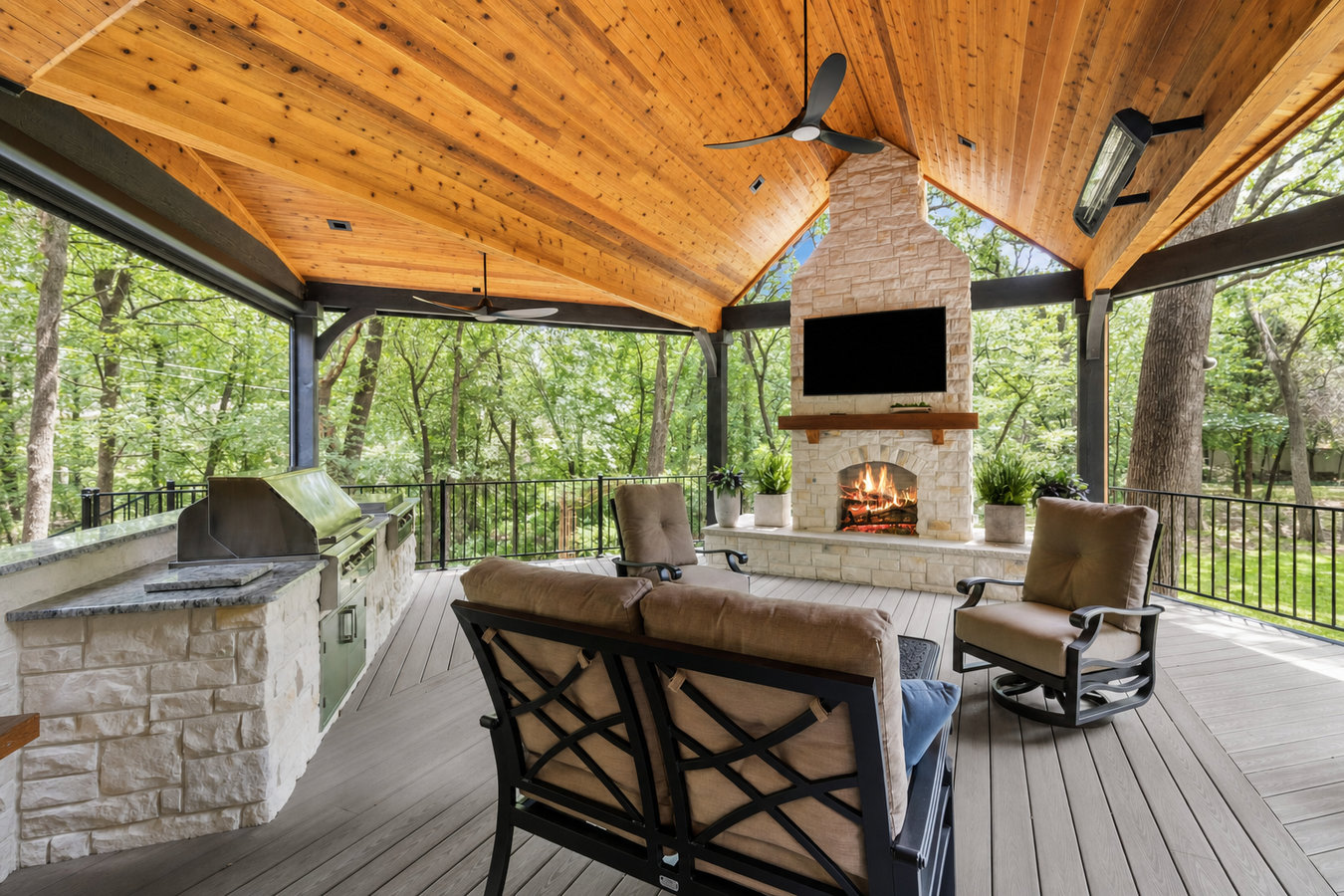
An uncovered patio in the Coachella Valley is unusable from April through October. A properly built covered patio changes that - giving you real outdoor living space the whole valley is known for.
Covered decks and patio covers in Desert Hot Springs are permanent or semi-permanent roof-like structures built over your outdoor space to block direct sun, heat, and blowing debris. The cover can be open-beam with filtered light, solid to block sun and rain, or louvered for adjustable shade. Most builds take three to ten construction days once permits are approved, with permit review at the City of Desert Hot Springs typically running two to six weeks.
If your patio is bare concrete that bakes all day and you have stopped using it, a solid or louvered cover can drop the temperature under the structure by 10 to 20 degrees - enough to make mornings and evenings genuinely comfortable. For homeowners who want to go a step further and also keep out insects and blowing sand, a screened-in porch or screened deck combines the cover with mesh walls to create a fully enclosed outdoor room.
We pull the permit, handle any HOA submission, and are present for the city inspection. Your job is to approve the design, clear the patio area the day before we start, and show up for the final walkthrough.
If you step outside in the afternoon from spring through fall and immediately retreat because the heat is unbearable, your outdoor space is not really usable. In Desert Hot Springs, where summer temperatures regularly exceed 110 degrees, an uncovered patio is essentially off-limits for months. That is the clearest sign a cover would change things.
The UV intensity in the Coachella Valley is among the highest in the continental United States. If your outdoor furniture is bleaching out, your concrete is spalling, or your cushions are deteriorating faster than expected, direct sun is the cause. A covered structure blocks that UV load and dramatically slows the wear.
Ceiling fans and outdoor lights need a solid overhead structure to attach to properly. If you want your backyard to be usable in the evenings, a covered patio gives you the framework to add those features safely - not a workaround with an umbrella or freestanding post.
If Banning Pass winds have torn your shade sail, bent a large umbrella, or sent it into a neighbor's yard, you have already experienced why temporary solutions do not hold up in Desert Hot Springs. A properly engineered permanent cover is built to handle those wind loads and will not become a projectile.
We build both attached and freestanding covered patios. An attached cover connects directly to your home's exterior wall and shares structural load with the house - it requires careful waterproofing where the two meet and is typically the cleaner aesthetic option. A freestanding cover stands on its own posts away from the house, which is structurally simpler but requires more posts and footings. Both need permits in California, and both require engineering for the wind loads specific to the Desert Hot Springs area. For homeowners who want an open-air overhead structure with filtered light rather than full shade, a pergola installation is a popular alternative. For homeowners who want to combine shade with insect and dust protection, we can integrate a screened enclosure into the same build.
Material choices for covered patios in the desert come down to aluminum, wood, or vinyl. Aluminum holds up well in sustained heat and requires almost no maintenance. Wood looks warmer and more natural but needs to be sealed or painted every few years to stay in good shape under Coachella Valley UV. Vinyl is low-maintenance but can look less substantial on larger spans. We recommend the material that fits your budget and how you want the space to look - and we will tell you honestly if a choice is likely to underperform in this climate.
Best for homeowners who want maximum shade and rain protection from a cover that ties into the home's roofline.
Best for homeowners who want filtered light and partial shade without a fully opaque roof overhead.
Best for homeowners whose yard layout makes attaching to the house wall impractical or where a separate outdoor pavilion makes more sense.
Best for homeowners who want the covered patio to function as a full outdoor living room with electrical for ceiling fans and lighting.
Desert Hot Springs sits at the northern end of the Coachella Valley, directly in the path of wind events that funnel through the San Gorgonio Pass. Those winds can exceed 60 mph during seasonal events and put real stress on any overhead structure. A covered patio built here needs heavier post footings and stronger connection hardware than you would need in a calmer climate. We design every cover we build in this area for the actual wind loads, not just minimum code - which is why our structures are still standing and latching correctly after the first big wind event of the season. Homeowners in Rancho Mirage and throughout the valley face the same wind pressure, and we apply the same engineering to every project.
The other Desert Hot Springs-specific challenge is the soil. Much of the Coachella Valley has caliche - a hard, calcium-rich layer beneath the surface that can sit anywhere from a few inches to a few feet down. Caliche is difficult to dig through and affects how deep your post footings need to go and how much labor is involved. A contractor who has not worked in this soil before may underbid the footing work and then hit you with change orders when they hit the hard layer. We know what to expect in Desert Hot Springs soil, and we factor it into every estimate. If you are out in Palm Desert or the surrounding Coachella Valley communities, the soil and wind conditions are similar and we serve those areas regularly.
We reply within one business day. On the first call we ask about your patio size, whether you are attached or want freestanding, and whether you have an HOA. Those answers shape the permit path and the estimate.
We come to your home, look at the existing slab or deck, note how the yard is oriented to the sun and wind, and talk through material options. You receive a written estimate within a few days that breaks down materials, labor, and permit fees - no verbal-only quotes.
Once you sign off on the design, we submit the permit application to the City of Desert Hot Springs Building and Safety Division. Permit review typically takes two to six weeks. We handle the paperwork and follow up with the city - use this window to clear the patio area and decide on any electrical add-ons.
Most covered patio projects take three to seven working days. The first day is usually setting post footings - holes are dug and concrete poured, then the crew waits for cure before continuing. After framing and roofing, a city inspector verifies the work. Once it passes, we walk you through the finished space and hand you the closed permit record.
We come out, look at the space, and give you a real number - no obligation, no sales pitch.
(760) 993-6310We size post footings and connection hardware for the actual wind conditions in Desert Hot Springs - not just minimum code. The San Gorgonio Pass winds can exceed 60 mph and we build accordingly, so your cover does not become a hazard during the first serious wind event.
We have worked in Coachella Valley soil enough to know where caliche is likely and how deep to plan for it. That knowledge goes into every estimate from the start - so you do not get change orders after the crew hits the hard layer mid-project.
We pull permits from the City of Desert Hot Springs Building and Safety Division before any work begins and schedule the city inspection ourselves. You receive a copy of the closed permit when we finish - the documentation that protects you when it is time to sell or file an insurance claim.
Aluminum covers rated for sustained heat and UV-resistant finishes on wood structures are our baseline for every project in the Coachella Valley - not an upgrade you have to ask for. Materials that hold up in San Diego or Sacramento often do not hold up here.
We build covered patios the way this climate actually demands - with the right footings, the right hardware, and materials that hold up under 300-plus days of desert sun. You can verify our California contractor license at cslb.ca.gov before you call, and the North American Deck and Railing Association is a resource for current outdoor structure standards we follow on every build.
A pergola gives you a defined outdoor structure with filtered overhead shade - a good fit when you want the open-air feel without a fully opaque roof.
Learn MorePair your covered structure with mesh walls to keep insects, dust, and blowing debris out while maintaining airflow through the space.
Learn MorePermit timelines in Desert Hot Springs mean starting early gives you the best chance of having shade in place before temperatures peak - reach out today.